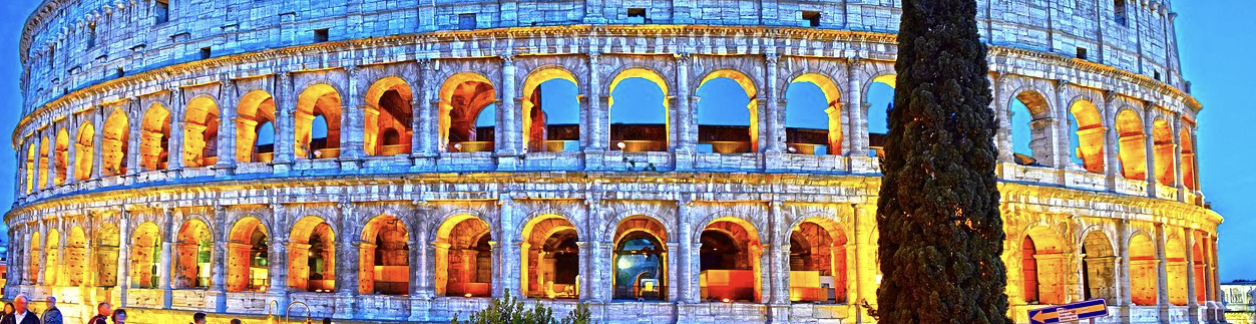
The Roman Empire, once the most powerful civilization in the ancient world, left a profound and lasting legacy that continues to fascinate historians, archaeologists, and travelers alike. From the grandeur of its architecture to the complexity of its societal systems, the remnants of the Roman Empire can be found scattered across Europe. This article will take you on a journey through some of the most significant and awe-inspiring Roman ruins, shedding light on their historical significance and enduring allure.
Join My Facebook Group To Share Your Travel Photos and Get Travel Advice!

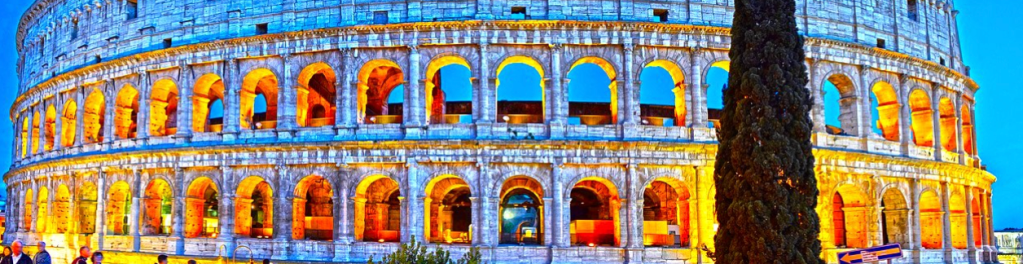
The Colosseum, Rome, Italy
No exploration of Roman ruins can begin without mentioning the Colosseum, an iconic symbol of Rome and ancient engineering prowess. Completed in 80 AD under Emperor Titus, this massive amphitheater could hold up to 80,000 spectators. The Colosseum hosted gladiatorial contests, animal hunts, and mock naval battles, reflecting the Roman Empire’s taste for grand and brutal entertainment. Its elliptical structure, advanced use of concrete, and complex system of vaults and arches are marvels of ancient architecture.
Want to see more gorgeous places around the world? Check out my YouTube channel, Explore With Kelsey
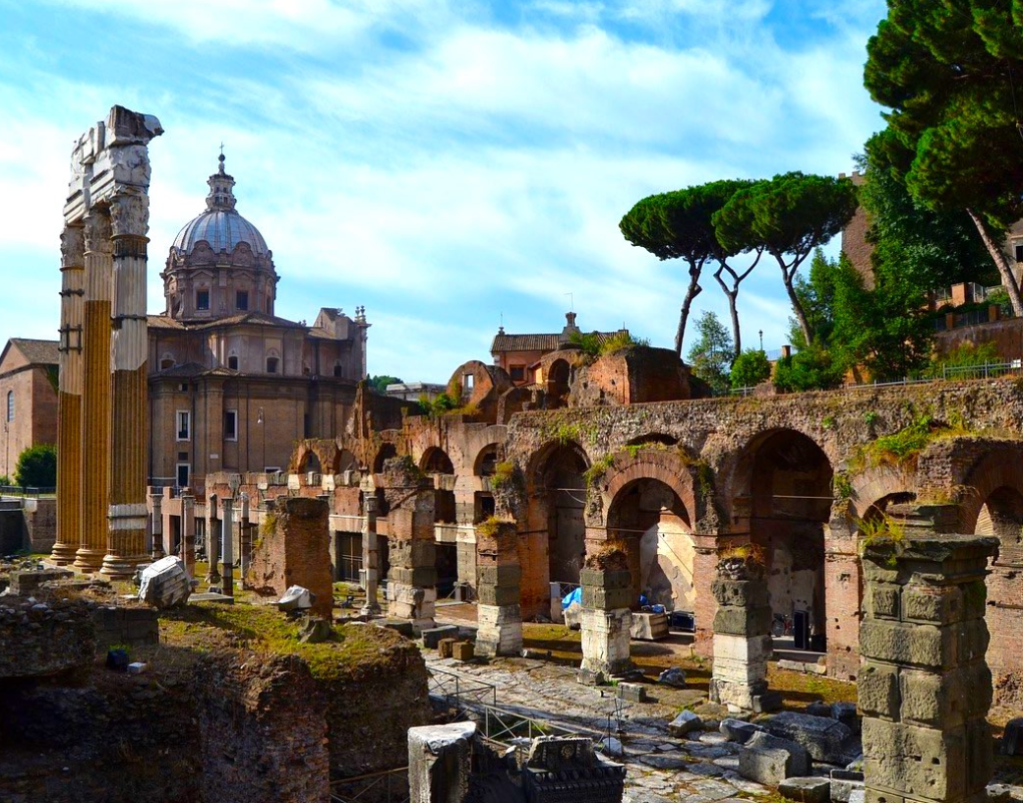
The Roman Forum, Rome, Italy
Adjacent to the Colosseum lies the Roman Forum, the political, commercial, and religious heart of ancient Rome. The Forum’s history dates back to the 7th century BC, but it reached its zenith during the Empire’s peak. The area is filled with the ruins of important buildings such as the Temple of Saturn, the Arch of Septimius Severus, and the Curia Julia, the Senate House rebuilt by Julius Caesar in 44 BC. Walking through the Forum, one can almost hear the echoes of Rome’s political debates and public speeches.
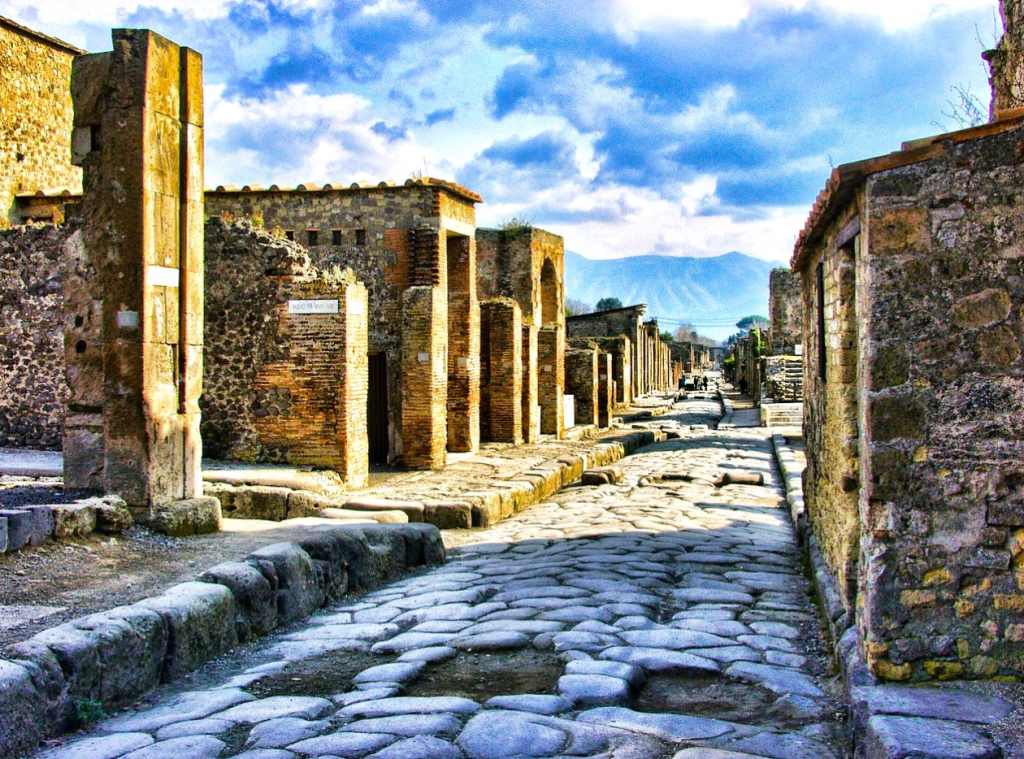
Pompeii and Herculaneum, Italy
The ancient cities of Pompeii and Herculaneum provide a unique snapshot of Roman life, frozen in time by the catastrophic eruption of Mount Vesuvius in 79 AD. Pompeii, a bustling city with a population of approximately 11,000, was buried under volcanic ash, while Herculaneum, a smaller, wealthier town, was engulfed by pyroclastic flows. Excavations of these sites have unearthed remarkably well-preserved buildings, frescoes, and artifacts, offering invaluable insights into Roman daily life, architecture, and art. The House of the Vettii in Pompeii, with its intricate frescoes, and the Villa of the Papyri in Herculaneum, containing a vast library of scrolls, are particularly noteworthy.
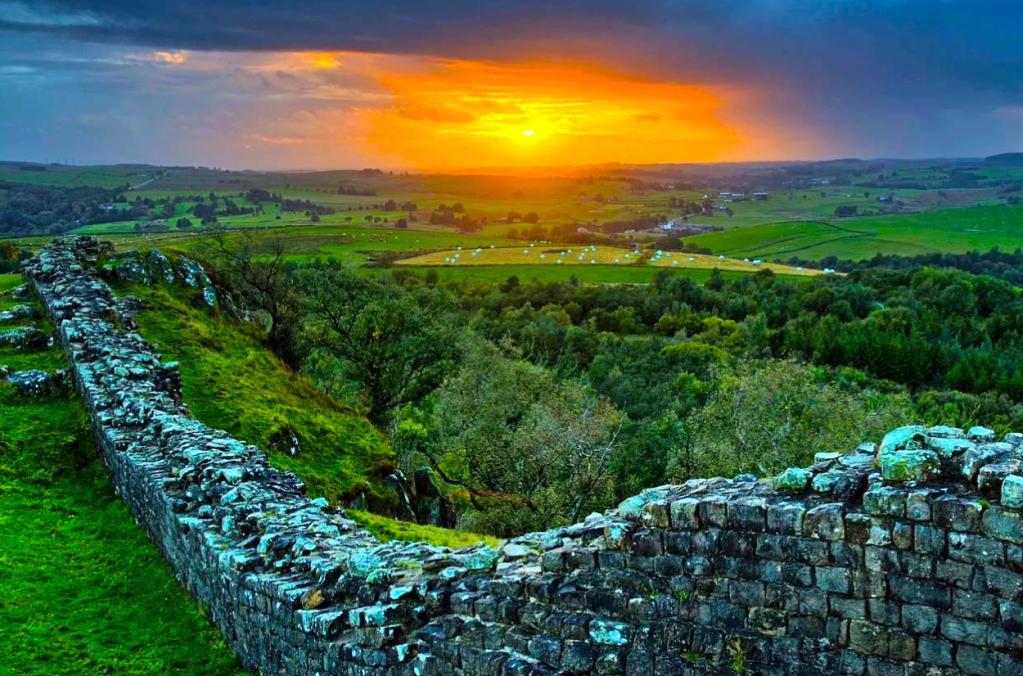
Hadrian’s Wall, Northern England
Stretching 73 miles across northern England, Hadrian’s Wall was built on the orders of Emperor Hadrian in 122 AD to defend the northern frontier of the Roman province of Britannia. This impressive fortification included milecastles, turrets, and forts such as Housesteads and Vindolanda, which housed the Roman garrison. The wall not only served as a military defense but also controlled trade and movement across the frontier. Today, Hadrian’s Wall is a UNESCO World Heritage Site, and its remains offer a glimpse into the Roman military’s life and the Empire’s northern limits.
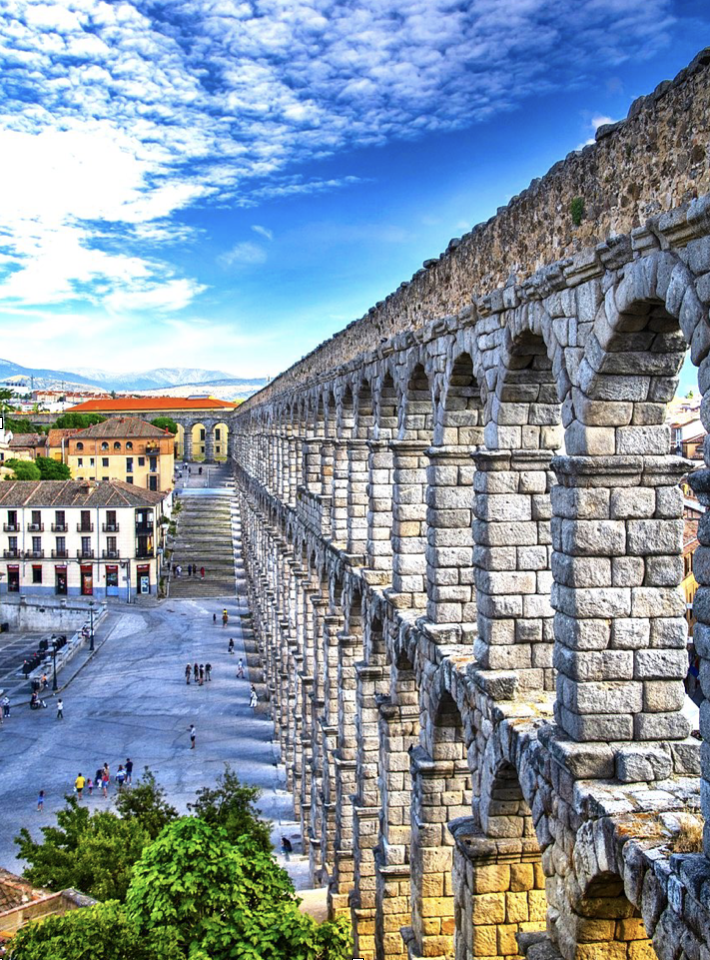
The Aqueduct of Segovia, Spain
The Aqueduct of Segovia is one of the best-preserved Roman aqueducts and a testament to the engineering brilliance of the ancient Romans. Constructed in the late 1st or early 2nd century AD during the reign of Emperor Trajan or Emperor Domitian, the aqueduct spans over 16 kilometers to bring water from the Frío River to the city of Segovia. The most striking section of the aqueduct, with its two-tiered arcades, runs through the city center and stands as a symbol of Segovia. This monumental structure, built without mortar, remains an enduring example of Roman engineering.

Baalbek, Lebanon
While not in Europe, the ancient city of Baalbek, located in modern-day Lebanon, was one of the largest sanctuaries in the Roman Empire and features some of the best-preserved Roman ruins in the world. The site, also known as Heliopolis, dates back to the 1st century BC and was dedicated to the gods Jupiter, Bacchus, and Venus. The Temple of Bacchus, in particular, is renowned for its grand scale and intricate carvings, standing almost intact. Baalbek’s ruins offer a glimpse into the religious and cultural practices of the Roman Empire’s eastern provinces.
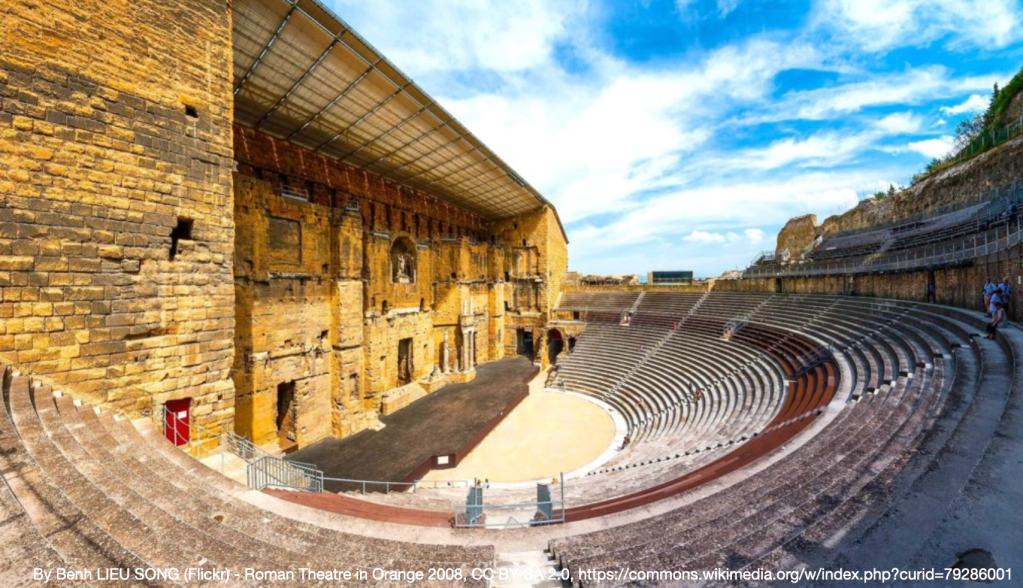
The Theatre of Orange, France
The Theatre of Orange, located in the Rhône Valley of France, is a stunning example of a Roman theatre that has survived nearly two millennia. Constructed in the early 1st century AD under Emperor Augustus, the theatre could accommodate up to 9,000 spectators. Its 103-meter-long facade is one of the best-preserved in the Roman world, and the stage wall still stands nearly 37 meters high. The theatre remains in use today, hosting the annual Chorégies d’Orange opera festival, thus continuing its legacy as a venue for performance arts.

The Pantheon, Rome, Italy
Another architectural marvel in Rome, the Pantheon, was completed around 126 AD during Emperor Hadrian’s reign. Originally built as a temple for all the Roman gods, the Pantheon’s most remarkable feature is its massive dome, which remains the largest unreinforced concrete dome in the world. The oculus at the dome’s apex provides natural light and symbolizes the connection between the temple and the gods. The Pantheon has been in continuous use throughout its history, serving as a Roman Catholic church since the 7th century. Its enduring presence underscores the architectural ingenuity of the Romans.
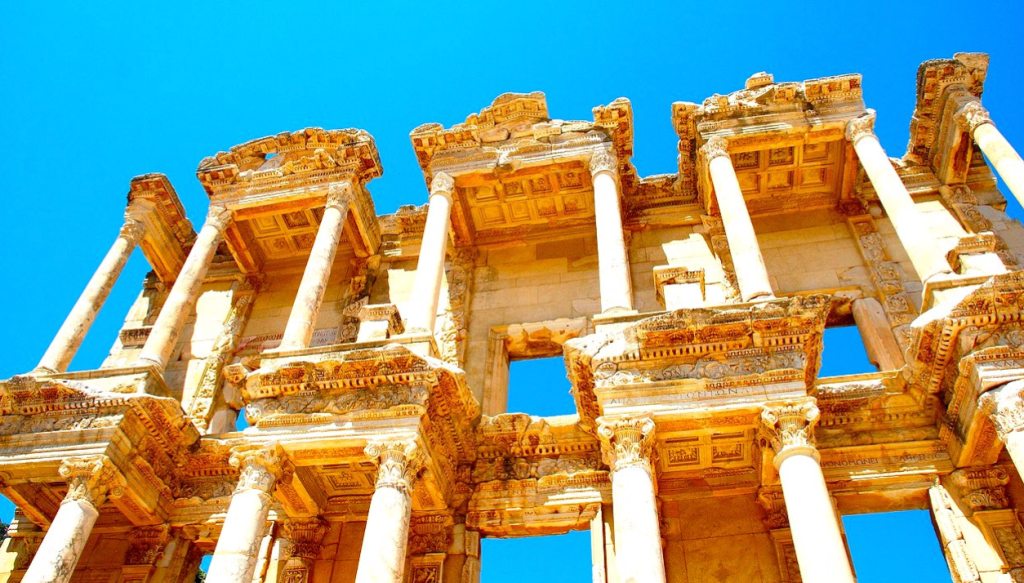
The Ruins of Ephesus, Turkey
The ancient city of Ephesus, located near the modern town of Selçuk in Turkey, was once a major trading hub and one of the largest cities in the Roman Empire. Ephesus is home to the Temple of Artemis, one of the Seven Wonders of the Ancient World, though only a single column remains today. Other significant structures include the Library of Celsus, built in 117 AD, which once housed thousands of scrolls, and the Great Theatre, which could accommodate 25,000 spectators. Ephesus’s ruins provide a comprehensive look at urban life in the Roman Empire.
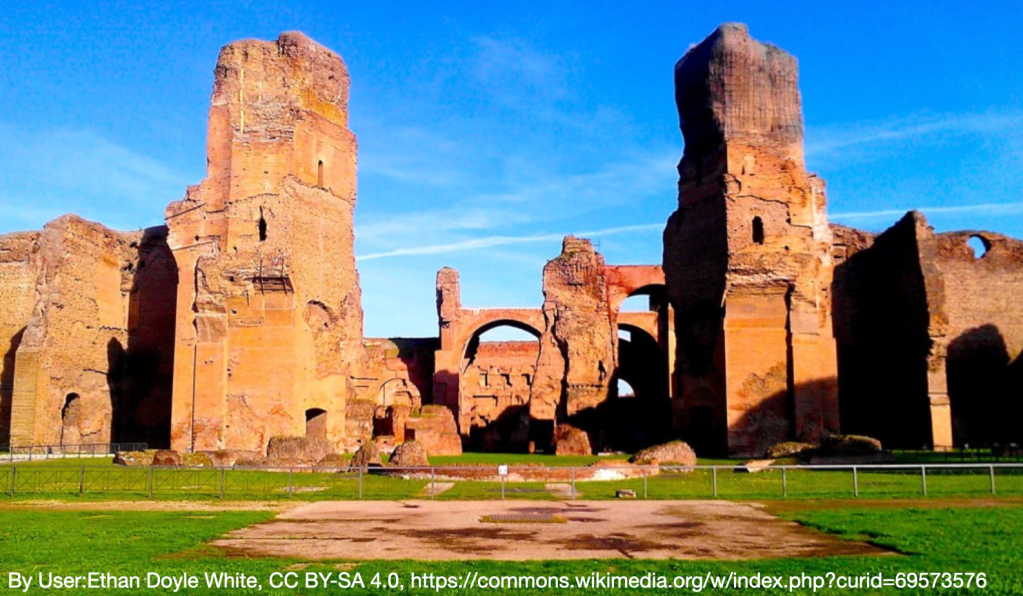
The Baths of Caracalla, Rome, Italy
The Baths of Caracalla, completed in 216 AD during the reign of Emperor Caracalla, were among the largest and most impressive public baths in ancient Rome. Covering an area of 27 acres, the complex included hot and cold baths, swimming pools, libraries, and gardens. The baths could accommodate up to 1,600 bathers at a time and were a testament to the Roman emphasis on public leisure and hygiene. The remains of the baths, with their towering walls and intricate mosaics, offer a glimpse into the grandeur of Roman public architecture.
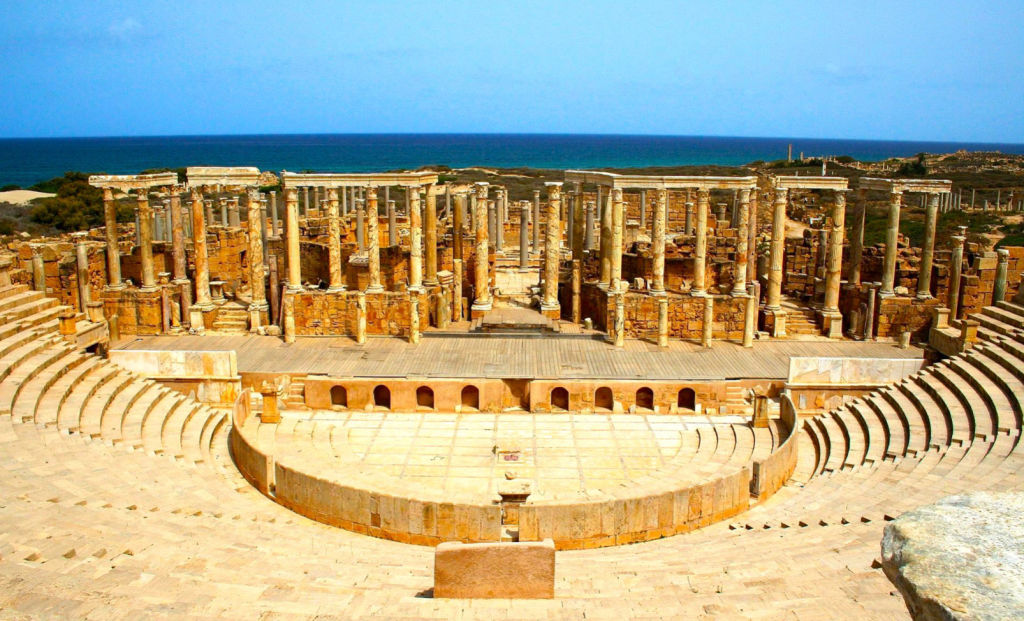
The Ruins of Leptis Magna, Libya
Leptis Magna, located in present-day Libya, was one of the most prominent cities of the Roman Empire’s African provinces. Founded by Phoenician colonists and later rebuilt by the Romans, the city flourished under Emperor Septimius Severus, who was born there in 145 AD. Significant structures include the Arch of Septimius Severus, the Basilica, the Theatre, and the Hadrianic Baths. Leptis Magna’s ruins are among the best-preserved Roman sites in the Mediterranean, providing valuable insights into Roman urban planning and architecture.
The ruins of the Roman Empire, scattered across Europe and beyond, offer a captivating glimpse into a civilization that shaped the course of history. These ancient structures, from the grandeur of the Colosseum to the engineering marvel of the Aqueduct of Segovia, reflect the ingenuity, power, and cultural richness of the Romans. As we explore these remnants of a bygone era, we gain a deeper appreciation for the enduring legacy of the Roman Empire and its profound impact on the world. Whether you are a history enthusiast, an architecture lover, or a curious traveler, the ruins of the Roman Empire promise a journey through time that is as educational as it is awe-inspiring.

Which do you think is the most impressive? Which would you visit? Let me know in the comments or on my Facebook Group: Explore With Kelsey!
 Lipsticks and Backpacks