
Art and Culture: Unveiling the Masterpieces of Florence
Florence, the cradle of the Renaissance, is a city where art, history, and culture are woven into the very fabric of its existence. Nestled in the heart of Tuscany, this Italian gem boasts an unparalleled legacy of artistic brilliance and architectural splendor. From the works of Michelangelo to the innovations of Brunelleschi, Florence is a living museum that continues to captivate and inspire visitors from around the globe. In this article, we will delve into the masterpieces that define Florence, exploring their historical significance and the enduring impact they have had on art and culture.
DISCOVER LIVE VIRTUAL TOURS with Explore with Kelsey (Me!), Over 100 Destinations
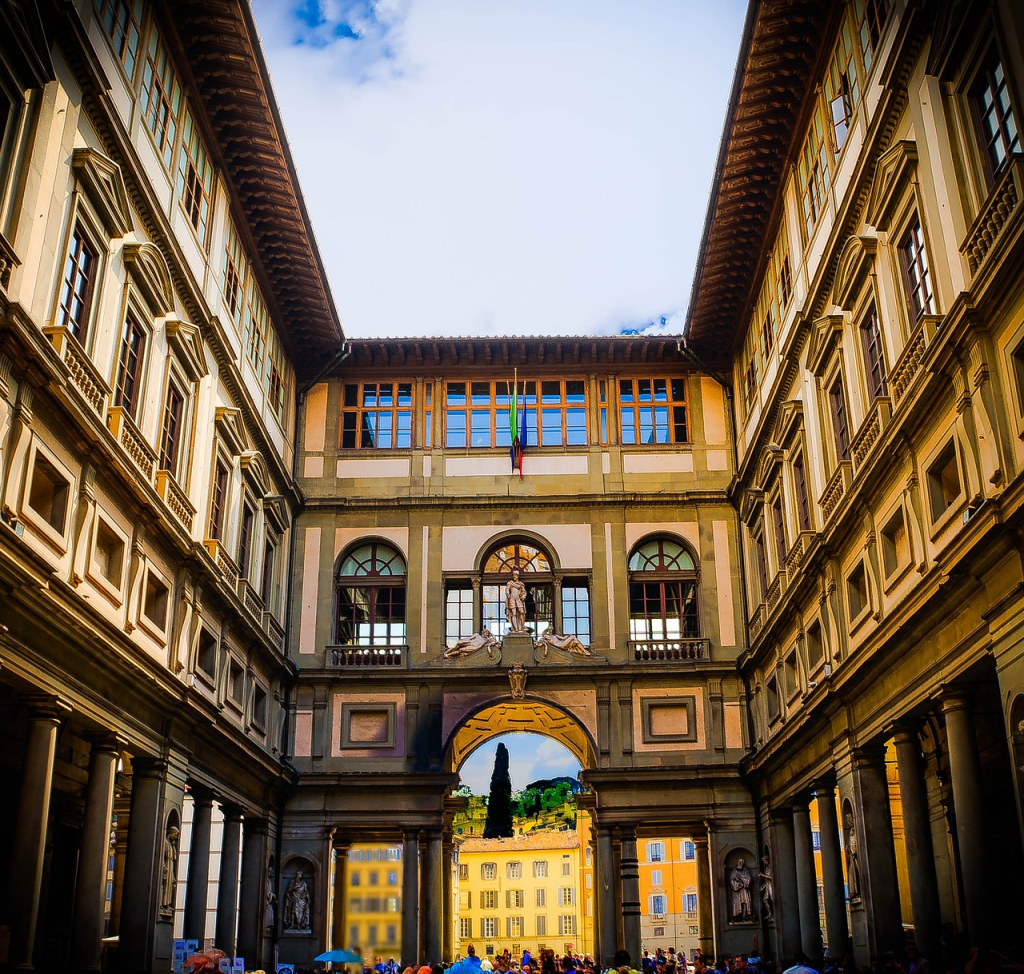
The Uffizi Gallery: A Treasure Trove of Renaissance Art
The Uffizi Gallery, one of the most famous art museums in the world, is a testament to Florence’s rich artistic heritage. Founded in 1581 by Francesco I de’ Medici, the gallery houses an extensive collection of Renaissance art. As you wander through its hallowed halls, you are greeted by masterpieces that have shaped the course of Western art.
One of the most iconic works in the Uffizi is “The Birth of Venus” by Sandro Botticelli, painted in the mid-1480s. This exquisite piece, with its ethereal depiction of Venus emerging from the sea, embodies the ideals of beauty and humanism that defined the Renaissance. Another highlight is Leonardo da Vinci’s “Annunciation” (circa 1472-1475), showcasing the artist’s innovative use of perspective and light.
Join My Facebook Group To Share Your Travel Photos and Get Travel Advice!
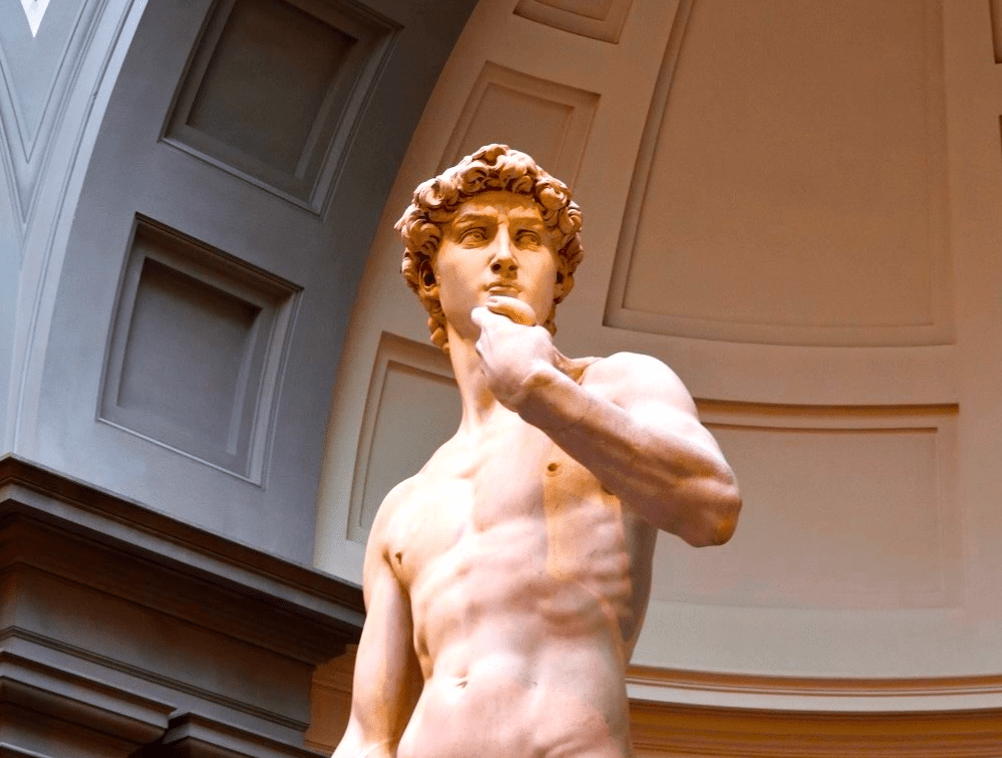
Michelangelo’s David: A Symbol of Perfection
No visit to Florence would be complete without marveling at Michelangelo’s David. This colossal statue, carved from a single block of marble between 1501 and 1504, stands as a symbol of human perfection and artistic genius. Originally intended to adorn the roofline of Florence’s cathedral, the statue was instead placed in the Piazza della Signoria, where it remained until it was moved to the Galleria dell’Accademia in 1873 to protect it from the elements.
David’s powerful stance, intricate detailing, and lifelike realism make it a masterpiece of Renaissance sculpture. Michelangelo’s ability to capture the human form in such a dynamic and expressive manner was groundbreaking, influencing countless artists who followed in his footsteps.
Want to see more gorgeous places around the world? Check out my YouTube channel, Explore With Kelsey

The Duomo: Brunelleschi’s Architectural Masterpiece
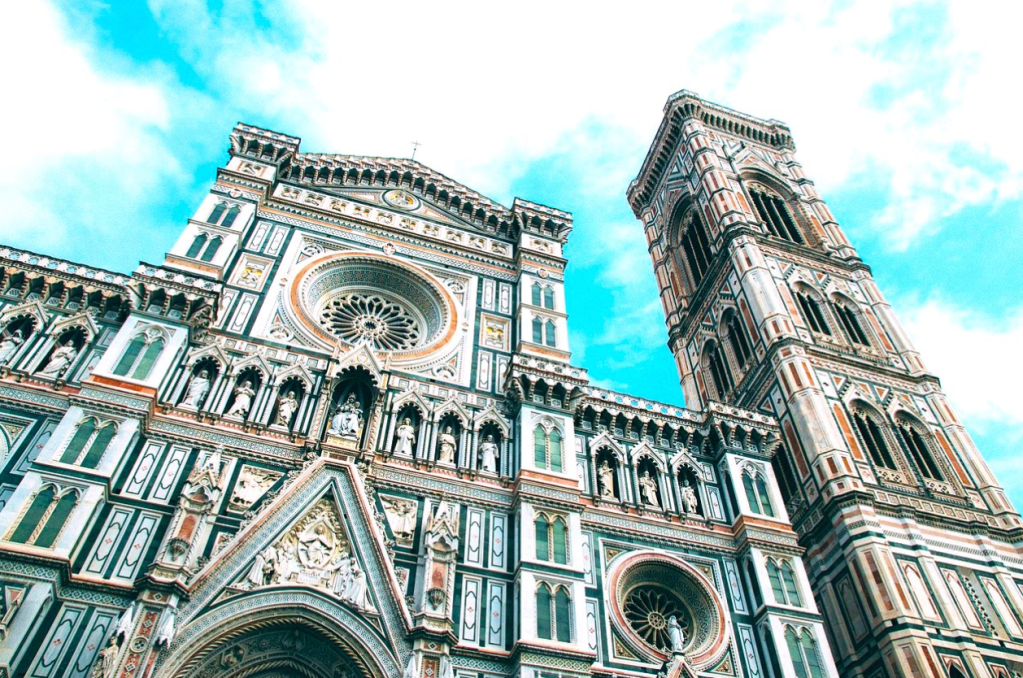
The Cathedral of Santa Maria del Fiore, more commonly known as the Duomo, dominates Florence’s skyline with its magnificent dome designed by Filippo Brunelleschi. The cathedral’s construction began in 1296 under the direction of Arnolfo di Cambio, but it was Brunelleschi’s innovative engineering that brought the project to fruition in the 15th century.
Completed in 1436, the dome remains one of the largest masonry domes in the world and a marvel of architectural ingenuity. Brunelleschi’s solution to the challenge of constructing such a vast dome without scaffolding involved a double-shell design and a herringbone brick pattern, which provided both strength and stability. The interior of the dome is adorned with Giorgio Vasari’s stunning frescoes depicting the Last Judgment, completed in the late 16th century.
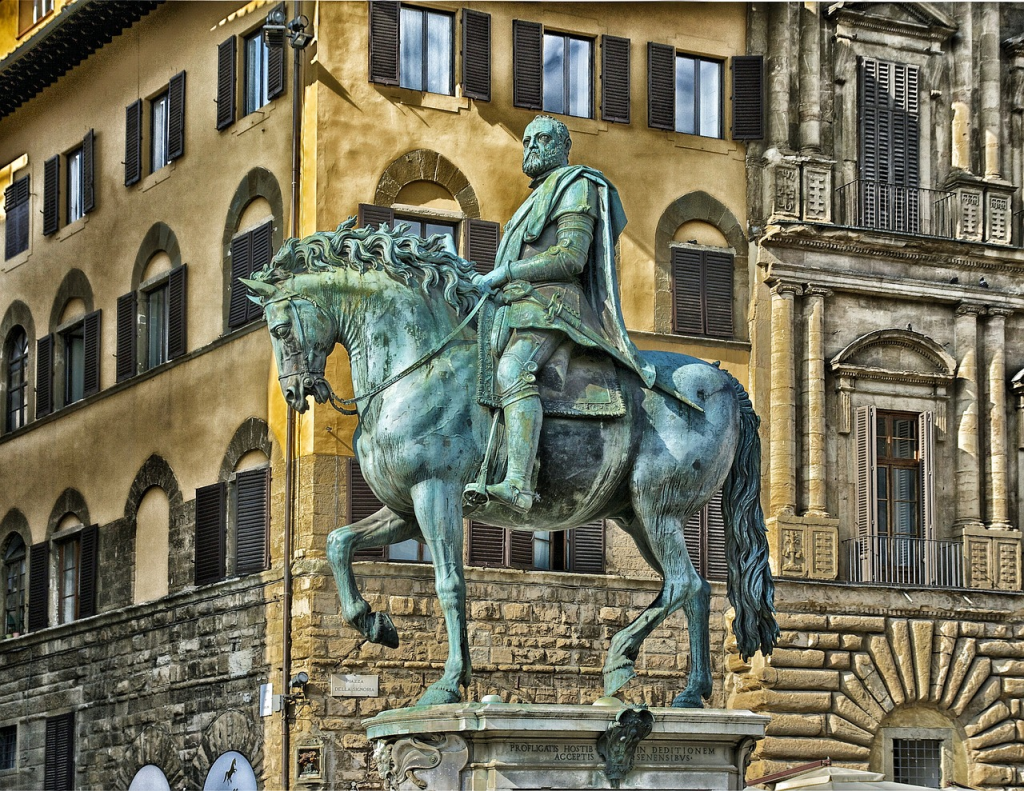
The Medici Chapels: A Testament to Dynastic Power
The Medici family, powerful patrons of the arts, left an indelible mark on Florence. Their influence is evident in the Medici Chapels, located in the Basilica of San Lorenzo. The chapels, designed by Michelangelo and completed in the 16th and 17th centuries, serve as the final resting place for many members of the Medici dynasty.
The New Sacristy, designed by Michelangelo between 1520 and 1534, is particularly notable for its sculptures of Lorenzo and Giuliano de’ Medici. These works, along with the allegorical figures of Dawn and Dusk, Day and Night, showcase Michelangelo’s mastery of form and his ability to convey complex human emotions through marble.
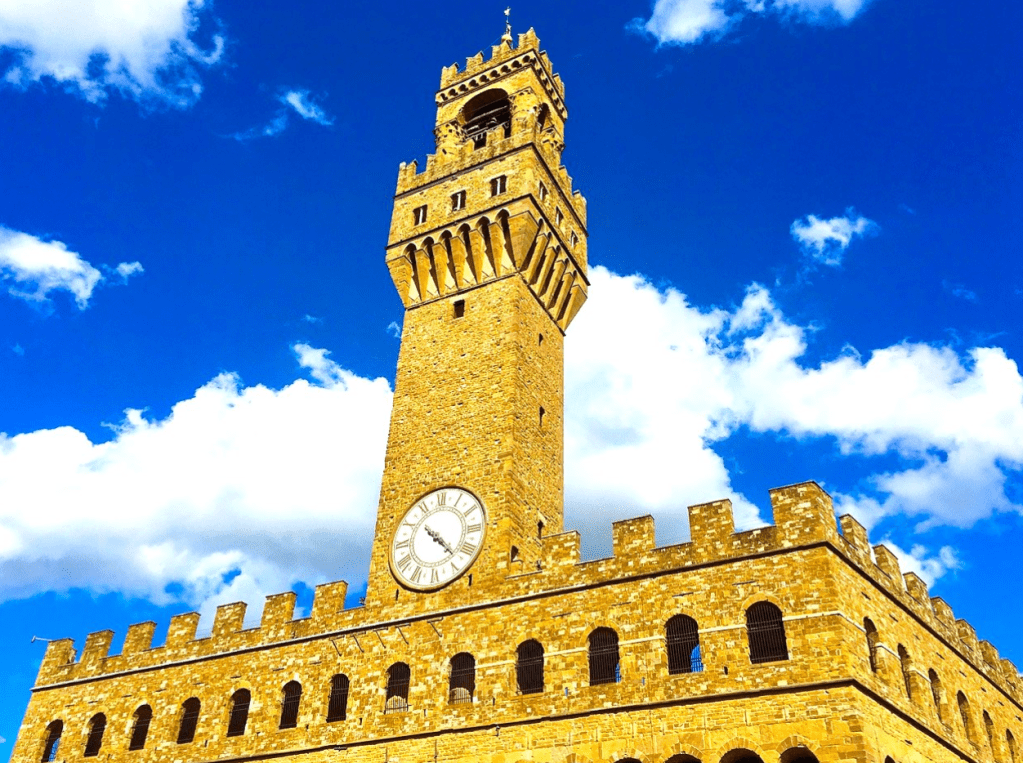
The Palazzo Vecchio: A Seat of Power and Art
The Palazzo Vecchio, Florence’s town hall, stands as a symbol of the city’s political and artistic heritage. Built in the early 14th century, the palazzo has served as the seat of the Florentine government for centuries. Its imposing structure and iconic tower dominate the Piazza della Signoria, reflecting the city’s medieval power.
Inside, the Hall of the Five Hundred (Salone dei Cinquecento) is adorned with frescoes by Giorgio Vasari and his workshop, commissioned by Cosimo I de’ Medici in the 16th century. These grandiose works celebrate the Medici family’s military victories and political achievements. The palazzo also houses Donatello’s “Judith and Holofernes”, a powerful bronze sculpture that exemplifies the artist’s skill in depicting dramatic tension.

The Bargello Museum: A Sculptural Haven
Housed in a former barracks and prison, the Bargello Museum is a treasure trove of Renaissance sculpture. Established in 1865, it boasts an impressive collection of works by some of the most renowned sculptors of the period. Among its highlights are Donatello’s “David” (circa 1440s), a bronze masterpiece that predates Michelangelo’s version and showcases a more youthful and introspective interpretation of the biblical hero.
Another gem in the Bargello’s collection is Cellini’s Perseus with the Head of Medusa (1545-1554). This bronze statue, commissioned by Cosimo I de’ Medici, stands as a testament to Benvenuto Cellini’s technical prowess and artistic vision. The dynamic pose and intricate details of Perseus and the slain Medusa exemplify the dramatic intensity of Mannerist sculpture.

The Pitti Palace: A Royal Residence of Art
The Pitti Palace, once the residence of the powerful Medici family, now serves as a museum complex showcasing an extensive array of art and artifacts. Originally commissioned by the wealthy banker Luca Pitti in the mid-15th century, the palace was later acquired by the Medici and expanded to its current grandeur.
The Palatine Gallery, located within the palace, houses an impressive collection of Renaissance and Baroque art, including works by Raphael, Titian, and Rubens. Raphael’s “Madonna of the Chair” (circa 1513-1514) and Titian’s “Portrait of Pope Julius II” (circa 1545-1546) are among the many masterpieces on display. The palace’s lavish rooms, adorned with frescoes, gilded stucco, and opulent furnishings, provide a glimpse into the splendor of Medici court life.

The Boboli Gardens: A Renaissance Oasis
Adjacent to the Pitti Palace, the Boboli Gardens offer a serene escape into nature and a testament to Renaissance landscape design. Originally laid out in the 16th century for Eleanora di Toledo, wife of Cosimo I de’ Medici, the gardens feature an array of statues, fountains, and grottoes set amidst meticulously manicured lawns and terraces.
The gardens’ highlights include the Fountain of Neptune, designed by Stoldo Lorenzi in the late 16th century, and the Grotta del Buontalenti, a whimsical grotto adorned with stucco and sculptures. The Boboli Gardens’ harmonious blend of art and nature provides a tranquil setting for contemplation and appreciation of Renaissance aesthetics.

Santa Croce: A Pantheon of Genius
The Basilica of Santa Croce, one of Florence’s most important churches, is often referred to as the Pantheon of the Italian Glories due to the illustrious figures buried within its walls. Founded in 1294, the basilica is a masterpiece of Gothic architecture, with its striking marble facade added in the 19th century.
Santa Croce is the final resting place of many renowned Italians, including Michelangelo, Galileo Galilei, and Niccolò Machiavelli. The church’s interior is adorned with frescoes by Giotto and his followers, depicting scenes from the life of St. Francis and other religious narratives. The Pazzi Chapel, designed by Brunelleschi in the 15th century, is a prime example of Renaissance architectural principles, with its harmonious proportions and elegant simplicity.
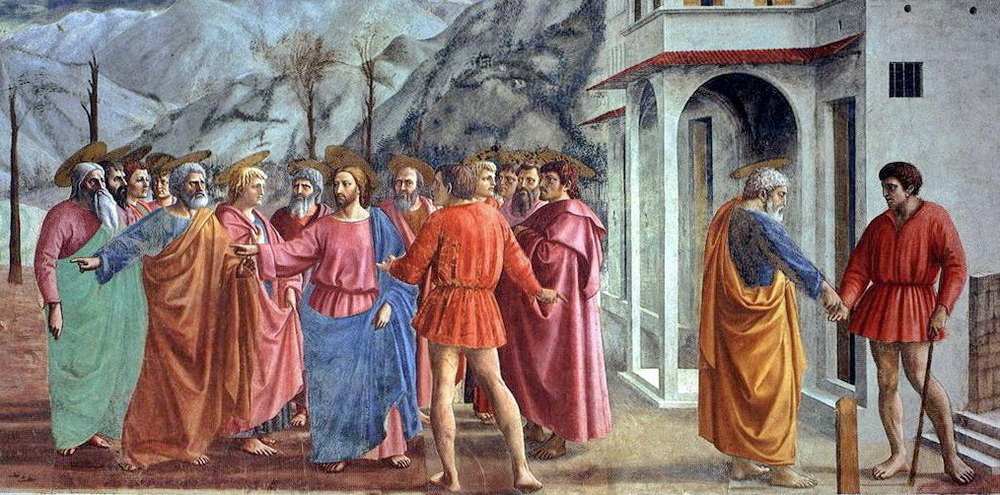
The Brancacci Chapel: A Frescoed Marvel
Located within the Church of Santa Maria del Carmine, the Brancacci Chapel is renowned for its stunning frescoes by Masaccio and Masolino. Painted in the 1420s, these works are considered a cornerstone of Renaissance art, showcasing a dramatic shift towards naturalism and expressive human emotion.
Masaccio’s frescoes, including “The Expulsion of Adam and Eve” and “The Tribute Money,” demonstrate his innovative use of perspective and chiaroscuro, which influenced subsequent generations of artists. The chapel’s frescoes were restored in the 1980s, revealing their original brilliance and reaffirming their status as masterpieces of early Renaissance art.
Florence’s rich tapestry of art and culture is a testament to its pivotal role in the Renaissance and its enduring influence on the world of art. From the iconic sculptures of Michelangelo to the architectural innovations of Brunelleschi, the city’s masterpieces continue to inspire and captivate. As you explore Florence’s historic streets and magnificent museums, you are not only witnessing the pinnacle of artistic achievement but also stepping into a vibrant legacy that has shaped the course of Western civilization.

Did I miss anything? Let me know in the comments!
What aspects of Florence’s rich history and vibrant culture would you be most excited to explore on your visit? Let me know in the comments or on my Facebook Group: Explore With Kelsey!
 Lipsticks and Backpacks